ONLINE • SELF-PACED

Strength and Conditioning Training Certification (Online, Self-Paced)

Get certified in strength and conditioning training online, at your own pace, for $99.99. Most learners finish in 2 to 4 weeks studying 1 to 2 hours per day. No degree required.

You will learn how to design a strength program, apply periodization, prevent injury, and manage recovery for athletes and general fitness clients alike.


Group Enrollments Available
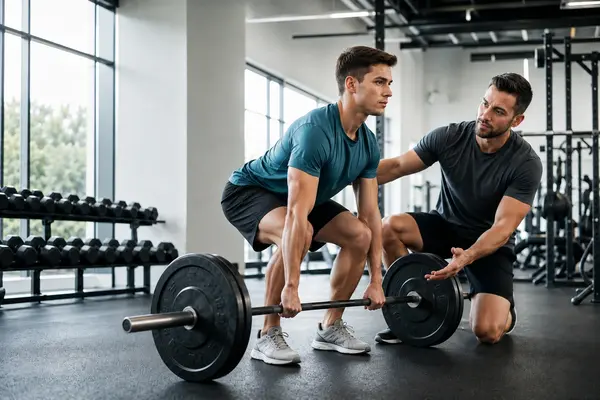
strength and conditioning coach
What Is Strength and Conditioning Training

What Is Strength and Conditioning Training?

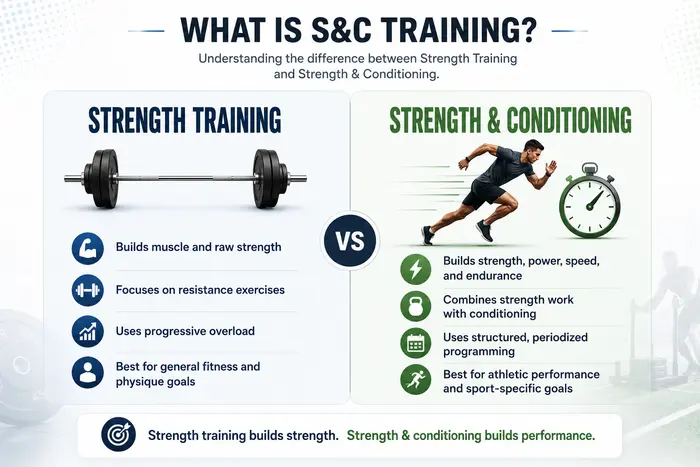
Strength and conditioning training is the applied science of improving an athlete’s strength, power, speed, agility, and recovery capacity through structured, periodized programming. It draws on biomechanics, bioenergetics, and exercise physiology to build training plans suited to a specific sport or goal.

It differs from general strength training in one key way: general strength training builds muscle and strength in isolation, while strength and conditioning training sequences strength, power, and conditioning work across a season to peak performance for competition or a specific physical goal. The "conditioning" half covers cardiovascular and metabolic capacity, the energy systems that let an athlete repeat effort without breaking down.

Who it is for: aspiring strength and conditioning coaches, personal trainers expanding into athletic performance, and serious athletes who want to understand the programming behind their own training.
What it covers: program design, periodization, biomechanics, injury prevention, recovery, and nutrition for performance.
What it does not require: a college degree, a personal training certification, or prior coaching experience.

Why Get Certified

Strength and conditioning coaching is not legally required to be certified, but certification help signal structured training knowledge to employers and clients, but hiring and client trust depends on experience, local requirements, and employer preferences. A formal credential tells a hiring coach, a gym owner, or a client that you understand program design, not just exercise demonstration.

✔ Signals Real Knowledge

Signals real knowledge of periodization and program design, not just exercise technique.

✔ Verifiable Credential

Gives gyms, sports programs, and clients a verifiable credential they can check directly with ExpertRating.

✔ Stand Out

Differentiates you from trainers who only hold a general personal training certification.

✔ Career Foundation

Builds a foundation for further specialization in sport-specific conditioning, youth athletic development, or rehabilitation-to-performance work.

How ExpertRating Compares

Strength and conditioning certifications vary widely in cost, time commitment, and prerequisites. Here is how the ExpertRating program compares to two of the most recognized credentials in the field, NSCA-CSCS and ACSM-CEP, on the factors most candidates actually weigh.

Factor ExpertRating S&C Certification NSCA-CSCS ACSM-CEP
Price $99.99 Typically $300 to $475 (exam fee alone, before study materials) Typically $350 member rate, $460 non-member rate; retest fee $235. ACSM-CEP exam plus prep-course bundle is listed at $499 member / $629 non-member. (ACSM)
Degree required High School Diploma or equivalent Yes, bachelor’s degree or higher plus current CPR/AED certification. Bachelor’s degree in exercise science or a related clinical field
Time to certify 2 to 4 weeks self-paced Several months to years (degree plus exam prep) Several months to years (degree plus exam prep), because of clinical education and eligibility requirements
Format Fully online, self-paced In-person proctored exam, with more formal preparation requirements Clinical certification exam pathway; not designed as a direct S&C coach certification
Best for Career starters, personal trainers expanding skills, fitness enthusiasts wanting formal grounding and candidates wanting an affordable first step before pursuing advanced credentials Elite, collegiate, or pro sport coaching roles Clinical exercise physiology roles
NSCA-CSCS and ACSM-CEP carry deeper industry recognition for elite and clinical roles and require a degree and proctored exam. ExpertRating is built for a different starting point: a fast, affordable, no-degree path into the field, or a credential that complements an existing personal training certification.

Meet Your Course Author: Shannon Clark

Shannon Clark

Shannon Clark is a highly accomplished fitness writer and training expert known for making complex exercise science simple, practical, and easy to apply. With hundreds of published articles, workout programs, and fitness guides across leading health and wellness platforms, she has helped countless readers understand how to train smarter, build strength, improve conditioning, and achieve sustainable results.

Her approach blends evidence-based fitness knowledge with clear, actionable guidance, giving learners the confidence to apply proven training principles in real-world settings. Through her writing and educational work, Shannon has built a reputation for breaking down advanced concepts into step-by-step strategies that students, fitness enthusiasts, and aspiring professionals can use immediately.

Meet Your Exercise Demonstrator

The Strength and Conditioning Training Certification is organized into practical chapters that move from foundational strength-training concepts to program design, injury prevention, recovery, cardio integration, motivation, and nutrition. Each chapter helps you understand how to build safer, more effective strength and conditioning programs for different fitness levels and training goals.

Watch a short introduction from the exercise-video instructor featured in this course. This preview gives learners a look at the practical training style used in the Strength and Conditioning Certification video materials.

What You Will Learn

The Strength and Conditioning Training Certification provides practical, evidence-based instruction that takes you from foundational exercise science to advanced program design and athlete development.

01

Strength and Conditioning Training Certification Program

Get oriented to the certification program, course structure, final certification test, and the purpose of strength training as a foundation for athletic performance and general fitness.
02

Why Strength Train?

Learn why strength training matters, who can benefit from a structured program, and what safety precautions should be followed before beginning or supervising strength-training activity.
03

Neuromuscular Anatomy of the Body

Understand the role of muscles, bones, connective tissue, and neuromuscular function in strength development, movement quality, and exercise adaptation.
04

Principles of Biomechanics

Study key biomechanics concepts such as momentum, torque, work, center of gravity, center of pressure, maximum strength, anatomical planes of movement, and different types of muscle action.
05

Bioenergetics and Metabolism

Learn how the body produces and uses energy during strength training, including the anaerobic lactate system, metabolic effects of training, and hormones influenced by strength work.
06

Goals of Strength Training

Explore the major goals of strength training, including strength development, improved performance, better body composition, injury resilience, and long-term physical conditioning.
07

Building a Foundational Set of Exercises

Learn how to choose and organize foundational exercises using weight machines, free weights, and body-part-specific movements for the quads, hamstrings, chest, back, arms, calves, and forearms.
08

Alternative Methods of Strength Training

Review complementary training methods such as core training, sit-ups, butterfly crunches, seated knee-ups, twisting crunches, side jackknifes, stability training, calisthenics, and bodyweight-only training.
09

Plyometric Exercise

Understand what plyometric training is, which exercises are commonly used, when plyometrics should be performed, and how often they should be included in a training plan.
10

Strength Training Specifics

Learn how to structure strength workouts using repetitions, sets, and rest periods so training volume and intensity match the user’s goals and experience level.
11

Designing Your Strength Training Workout Program

Study different strength-training program formats, including full-body workouts, upper/lower-body splits, and body-part split routines.
12

Advanced Strength Training Techniques

Learn advanced methods such as supersets, drop sets, pre-fatigue sets, pyramid sets, and circuit training, and understand how these techniques can be used to add variety and progression.
13

Individual Differences

Learn how age, body type, training status, athletic background, and fitness level affect program design for younger individuals, older adults, ectomorphs, mesomorphs, endomorphs, trained users, untrained users, strength-trained athletes, and endurance athletes.
14

Designing a Proper Strength Training Warm-Up

Understand how to prepare the body for training through an effective warm-up and how to use a cool-down to support recovery after exercise.
15

Injury Prevention

Learn practical injury-prevention strategies, including warming up properly, wearing suitable clothing and footwear, starting workouts well-fueled, knowing when to back off, getting help with new exercises, avoiding distractions, using ice/rest/elevation when needed, evaluating program plans, and supporting recovery with good nutrition.
16

Cardio Training and Strength Training

Understand how endurance training, steady-state cardio, speed training, sprint training, central nervous system fatigue, and injury risk interact with strength-training programs.
17

Strength Training and Overtraining

Learn how to recognize signs and symptoms of overtraining and why recovery planning is important for safe long-term progress.
18

Recovery Enhancement Techniques

Explore recovery methods such as stretching, hot baths, sleep, naps, and pre- and post-workout nutrition to support adaptation and reduce training fatigue.
19

Motivation and Psychology

Learn how goal setting, rewards, visualization, positive self-talk, and accountability partners can help users stay consistent with strength and conditioning programs.
20

Pre- and Post-Strength Training Nutrition

Understand the basics of pre-workout and post-workout nutrition and how fueling strategies can support training performance, recovery, and progress.

Exam, Certificate, and Renewal

Complete the online certification exam and receive credentials that you can share with employers and clients.

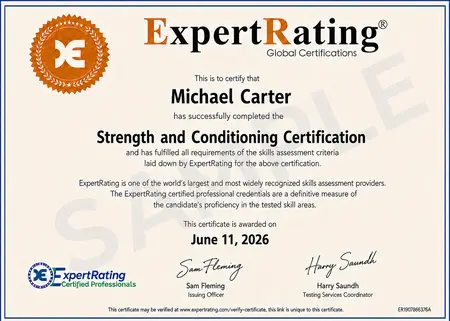
Strength and Conditioning Certificate

How the Exam Works

  • The exam is taken online from your own device after completing the courseware.
  • If you do not pass, you can retake the exam for $20, up to three times.
  • Your transcript shows your exam score and is available online after completion.

What You Receive

  • A downloadable professional certificate as a high-quality PDF
  • An online transcript showing your exam score
  • Proof of certification you can share with employers and clients
  • Optional printed certificate mailed to your address for an additional fee
🔄

Renewal

The certification is valid for one year. Renew by paying a $30 fee and you will receive a new downloadable certificate.

Career Outcomes for Strength and Conditioning Coaches

Explore where strength and conditioning professionals work and understand current employment and salary trends.

Career Outcomes for Strength and Conditioning Coaches

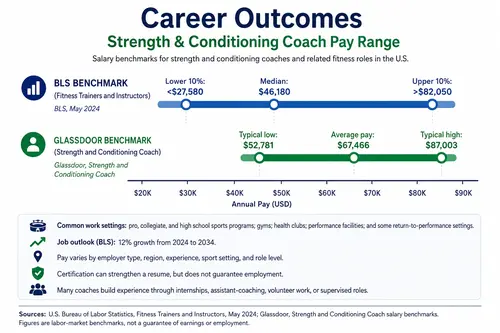
Strength and conditioning coaches may work with professional, collegiate, and high school sports programs, as well as commercial gyms, health clubs, performance facilities, and some physical therapy or return-to-performance settings. In team and school environments, they often coordinate with head coaches, athletic trainers, or other performance staff to help manage athlete training, conditioning, recovery, and seasonal workload.

Fitness Trainers and Instructors (BLS)

The U.S. Bureau of Labor Statistics groups many related roles under "fitness trainers and instructors."

  • Median annual pay: $46,180 (May 2024)
  • Lowest 10% earned less than $27,580
  • Highest 10% earned more than $82,050
  • Employment projected to grow 12% from 2024–2034, much faster than the average for all occupations.

Strength and Conditioning Coach (Glassdoor)

Glassdoor reports a higher U.S. average for the specific title "Strength and Conditioning Coach."

  • Average annual pay: $67,466
  • Typical salary range: $52,781 – $87,003

Actual pay varies by employer type, region, level of experience, sport setting, and whether the role is part-time, full-time, assistant-level, or head coach-level.

Important Information

Income and hiring outcomes vary by region, employer, certification, education, and hands-on coaching experience. These figures are reported labor-market benchmarks, not a guarantee of earnings or employment.

Building Your Career

Certification can strengthen a resume by showing that you have completed structured training in strength and conditioning concepts, program design, and athlete-focused training principles. However, certification alone does not guarantee employment. Many aspiring strength and conditioning coaches build practical experience through internships, volunteer roles, assistant-coaching positions, or supervised work with experienced coaches before moving into full-time roles.

Who Developed This Certification

Learn more about the organization behind the Strength and Conditioning Training Certification.

ExpertRating

ExpertRating has operated since 2001 and has delivered certifications and skill tests to more than 25 million people across 160 countries. The company is ISO 9001:2015 certified, which reflects documented, audited quality-management processes for how courseware is developed and maintained.

25M+

Certifications and skill tests delivered worldwide.

160+

Countries served.

Since 2001

More than two decades of online certification experience.

ISO 9001:2015

Certified quality-management processes.

Accreditation and Quality Standards

Certification Status

This ExpertRating certification is not currently presented as NCCA-accredited. ExpertRating's ISO 9001:2015 certification reflects documented quality-management processes, but ISO 9001:2015 should not be positioned as equivalent to NCCA accreditation for a fitness or strength and conditioning credential.

Employer Recognition

Over 6,500 companies, including Convergys, UPS, GAP, Federal Bureau of Prisons, Coke, Citrix, IKEA Systems, Google, Ericsson, Walmart, and Dell use ExpertRating for employee training or skill verification.

ExpertRating responds to hundreds of employer verification requests annually, so your credential can be confirmed directly by anyone checking it.

Trusted by Thousands of Employers Worldwide

ExpertRating - Real Reviews from Real Students

See what our students are saying about their certification experience.

Colin Herb ★★★★★
✅ Verified

This certification helped me coach student-athletes in the weight room, teach technique, critique form, and maintain safety. It also helped our wrestling program develop faster when we didn’t have a dedicated S&C coach.


Spencer Martin ★★★★★
✅ Verified

The certification allowed me to assist with college baseball strength and conditioning sessions for 10+ years, monitor athletes in the weight room and on the field, and help them achieve their athletic and strength goals.


Rhett Baker ★★★★★
✅ Verified

This certification strengthened my understanding of training techniques, aerobic and anaerobic exercise, strength-building strategies, and recovery. It helps me supervise athletes more effectively and support people working to improve their fitness.


Jennifer McMonagle ★★★★★
✅ Verified

ExpertRating helped me get involved with athletes’ off-season lifting schedules, supervise team lifts safely, and build my strength and conditioning knowledge so I can better serve my athletes.


Riley Freeland ★★★★★
✅ Verified

The certification gave me foundational knowledge in periodization, exercise science, and program design. I used it to create evidence-based strength plans that improved player performance, supported injury reduction, and built credibility with staff and players.


Natividad Rondan Bernal ★★★★★
✅ Verified

My Strength and Conditioning certification gave me the tools to design safe, effective programs for Marines. It helps me coach with purpose, prevent injuries, and improve performance using science-based training.


Frequently Asked Questions

Answers to the most common questions about the ExpertRating Strength and Conditioning Training Certification.

No. The ExpertRating Strength and Conditioning Training Certification has no degree requirement and no prerequisite coaching experience. Compare this to NSCA-CSCS and ACSM-CEP, both of which require a bachelor's degree or higher plus current CPR/AED certification.

Yes. The certificate is recognized internationally and includes employer verification support regardless of where you are studying or working.

Most learners complete the course in 2 to 4 weeks, studying 1 to 2 hours per day. You set your own pace and there is no fixed deadline.

The fee covers the complete courseware, the certification exam, and your digital certificate and transcript on passing. A printed certificate is available for an additional fee.

You can retake the exam for $20, up to three attempts. There is no waiting period between attempts.

A personal trainer certification focuses on general client coaching, exercise technique, and basic program design. This certification goes deeper into periodization, biomechanics, and sport-specific conditioning, the skills used by coaches who program for athletic performance rather than general fitness.

Yes, annually, for a $30 renewal fee. You will receive a new downloadable certificate each time you renew.

Yes. You can return to your study material at any time after completing the certification.

Get Certified Today

Start the Strength and Conditioning Training Certification for $99.99. No degree required. Self-paced, online, and ready when you are.


Group Enrollments Available