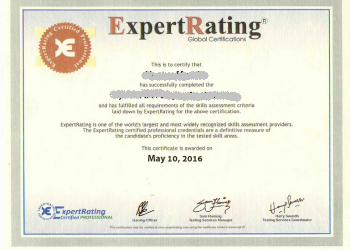
The ExpertRating Online Science Teacher Course (leading to ExpertRating Teaching
Certification-Science: Grades 4-6).
Want to increase
your effectiveness as a science teacher for the middle grades? Join
us and learn about the nature and history of science as well as how
to help students in this age group grasp the scientific method.
You'll receive
lots of worksheets and specific examples of some great experiments
you can use in your own classroom. We'll cover principles of direct
instruction and many different learning and organizational tools
that will benefit your students. You'll even learn how you can use
science class to improve the emotional climate in your classroom!
All through the course, we'll provide worksheets and check lists you
and your students can put to immediate use. You'll see how helpful
they are in the lessons on the scientific method, writing a research
paper, and producing a science fair. We'll also cover foundational
content in both physical science and life science. You'll learn how
to use a study of the earth's atmosphere to teach students how to
make and interpret a variety of graphs—an important skill for
standardized testing.
By the end of the
course, you'll have gained knowledge about both science and teaching
methods. Your confidence will soar and you'll have many new skills
that will benefit both you and the children you teach. You'll also
learn about some of the best Web sites available to science
teachers—they'll be great resources for you! And we'll all benefit
from the Discussion Area where you can share your experiences and
profit from the experiences of your fellow teachers.
This course includes a knowledgeable and
caring instructor who will guide you through your lessons,
facilitate discussions, and answer your questions. The instructor
for this course will be Holly Trimble.
Holly
Trimble
About
the
ExpertRating Online Science Teacher Course instructor :
Holly Trimble has a bachelor's degree in physical therapy from
the University of Colorado and a master's degree in pediatric
physical therapy from Boston University. She completed an additional
15 credit hours in education at the doctoral level. She taught math
and science to sixth-graders for several years at a private school,
and also worked as a private tutor for children with learning
disabilities. She has lectured on health-related topics to all age
groups, from school-age children to adults, and has been a guest
speaker at colleges and universities including Wellesley College,
Boston College, MIT, and Boston University. She is also an adjunct
professor, teaching college-level anatomy and physiology courses
online and in the classroom.
Online Teaching
Course (Science: Grades 4-6) requirements:
For taking this instructor led ExpertRating Online Science Teacher Course you need
Internet access, e-mail, and the Microsoft Internet Explorer or
Mozilla Firefox Web browser.
Testimonials:
The ExpertRating Online Science Teacher Course has received overwhelming positive
feedback and reviews from students around the world. Here are a few:
"After
teaching third grade for the past 10 years, I will teach 5th and 6th graders
science this coming year. I am looking forward to using what I learned in this
course."
"Excellent
course - very well worth the time!"
"Great
information!! Very useful!!"
"Great
set of extra resources (websites especially). I look forward to exploring them
in the months to come!"
"Great
use of the on-line format. Good graphics. It was very useful to have so many
reproducibles in this class...that is really helpful. I learned a great deal
about science and how to teach it. I will be teaching 2nd grade in the fall but
I know I can use/change this material to suit my class. Instructor was
excellent-giving so many ideas from her own experience!"
"Having
never taught science, this course offered me easy to understand information and
lots of ideas to use in the classroom."
"Holly
did a fabulous job organizing and presenting the material! There were many
useful suggestions and resources that I feel can be easily integrated into my
own class! I would highly recommend this course to anyone looking to increase
the teaching value of their science lessons."
"I
enjoyed this class and found it useful. The writing style used in the lessons
made it easy to understand and interesting to follow. It was great to brush up
on scientific knowledge, learn some new information, and review some best
practices to help me better meet the instructional needs of my students."
"I
enjoyed this course so much, I have told several of my colleagues about it! I
have no doubt that I will be using the information presented to me by my
instructor!"
"I
found this course to be very beneficial to me. I would highly recommend it to
anyone who teaches science no matter the grade level."
"I
have benefited so much from this course. I've never taught Science, and was sort
of dreading it, but this course and instructor have me excited. There were so
many practical helps."
"I
have enjoyed every lesson in this course. I even looked forward to each lesson's
release! The information you offered was relevant and I did not feel like I was
wasting a second of my precious free time. As I studied for the final, I
realized how much information I had read in the past six weeks. I would never
have been able to cover that much material by reading a book because: 1) I
wouldn't think that I had the time. 2) There's often too much "fluff" to wade
through. Your course offers valuable and relevant information, split into 12
portions, and "It's all good"-there's no filler. Thank you so much!"
"Thank
you so much for all the information. I feel much more capable of teaching
science to my students."
ExpertRating Online Science Teacher Course
(leading to
ExpertRating Teaching Certification-Science 4-6 Grades)
ExpertRating
is one of the world's only ISO 9001:2008 Certified companies (from
TUV America) offering an Online Science Teacher Course (leading to ExpertRating Science Teacher Skills Certification).
ExpertRating is a trusted name in online testing and certification
with over 200,000 certified professionals in over 60 countries in
more than 200 skill areas. ExpertRating offers its testing services
to the world's best companies such as Convergys Corp, UPS, GAP,
Sony, Coke, Citrix, Deltek Corp, IKEA Systems and Ericsson to name a
few. See
where ExpertRating Certified Professionals are working.
It is very safe to buy from
ExpertRating. Apart from being an ISO 9001:2008 certified company, it is a member of the TRUSTe and HackerSafe approved.
ExpertRating Solutions has been reviewed by TRUSTe for compliance of their strict program requirements ensuring that your information is always safe.
ExpertRating has certified Several thousand individuals who are working with leading companies across the US and
other countries.
View list.
When you choose the
ExpertRating Online Science Teacher Course you can be sure that you are buying a
premium International certification that is recognized by hundreds
of employers and Government bodies in the US and other countries.
With ExpertRating you get certified
quickly online and you are equipped with a store house of
information through the in-depth ExpertRating Online Science Teacher Courseware which has
been developed by experienced Education Industry Experts.
The ExpertRating Science Teacher Certification
(Grades 4-6) is by far the best value for money instructor led
Science Teacher Program at $129.99.
Some Popular questions and answers about
this ExpertRating Online Science Teacher Courseand Certification:
How much does the
Science Teacher Certification cost and what does it include?
You can buy this ExpertRating Online Science Teacher Course
leading to
Science Teacher certification at a special offer price of only $129.99 which
includes the in-depth ExpertRating Online Science Teacher Courseware and exam fee. This is
the best value for money Science Teacher Program available till date. You
get the following services within the USD $129.99 fee.
In-depth ExpertRating Online Science Teacher Courseware including scenarios and case studies.
An instructor to guide you through the
course and to whom you can direct your questions.
World wide airmail delivery of the hard
copy Science Teacher Certificate. The Science Teacher Certificate can be used
to prove your certified status and does not mention the words
"online".
An online transcript that can be used to
prove your certified credentials on the internet at any time.
How do I get certified?
The process of getting yourself certified is very simple. All you have to do is buy the
ExpertRating Online Science Teacher Course for $129.99. Log in to the instructor led course using your password. Go through the
ExpertRating Online Science Teacher Courseware (which would take you 6 weeks) and complete the final
Science Teacher Certification exam at your convenience. You can complete the exam within 2 months of buying the
Science Teacher Certification. The result of the exam appears as soon as it is completed, and your
Science Teacher Certificate is mailed immediately.
What learning aids will I get?
The
ExpertRating Online Science Teacher Course includes the following learning aids:
24 x 7 hour access to the courseware. A printer friendly version of the
ExpertRating Online Science Teacher Course is also provided
A friendly instructor to answer your questions online
A discussion area to have your questions answered
Chapter end quizzes to ensure that you are learning important aspects of every chapter
Chapter assignments to help you practically use the
Science Teacher that you will learn during the Science Teacher Course.
What is the final exam like?
The final exam is fully based upon the
ExpertRating Online Science Teacher Courseware that is provided along with the
Science Teacher Certification. If you have gone through the courseware properly you should not have a problem clearing the exam. The exam consists of multiple choice questions from all chapters of the
ExpertRating Online Science Teacher Courseware.
What are the course start dates?
ExpertRating instructor led courses commence
every month, you can always choose a suitable date for your course
commencement in any month. To see available course start dates,
please click on the "Enroll now" button.
All courses run for six weeks, with a two-week grace period at the end. Two lessons are released each week for the six-week duration of the course. You do not have to be present when the lesson is released, but you must complete each lesson within two weeks of its release.
A new section of each course starts on the second or third Wednesday of each month. If enrolling in a series of two or more courses please be sure to space the start date for each course at least two months apart.
Teaching
Grades 4-6 Science is a valuable Certification which will make
learning science more interesting and fun for your students.
The Teaching
Grades 4-6, Science course provides a comprehensive understanding of
the physical, earth and life sciences. The course will enhance the
science teachers’ abilities to use manipulative materials and
scientific techniques. You will also come across scientific
terminology during the passage of this course and worksheets and
check sheets have been provided which the students can put to
immediate use.
This course will open new avenues for
science teaching by its emphasis on focus for interpretation and
scientific explanation. The ExpertRating Teaching Grades 4-6 Science
Certification course will make you familiar with innovative teaching
methods to teach science to your students.
This first lesson
will go over the challenges and joys of teaching
science to this age group. You'll learn why this
subject can be so difficult to teach and some
specific ways to overcome those difficulties.
This lesson will also discuss how you can help
your students use their textbooks most
effectively and some great tricks to help your
students improve their memories.
Friday - Lesson 02
This lesson will
begin with a short history lesson. You'll learn
about some of the wrong beliefs scientists held
just a few centuries ago and how some courageous
scientists challenged those beliefs. Then this
lesson will move on to a discussion about
different types of scientific research where
you'll learn the distinctions between
correlational studies, demonstrations, and
experiments. This lesson will next focus on
using the scientific method to design great
experiments, and you'll become an expert at
identifying control and experimental groups, and
control, independent, and dependent variables.
Most importantly, you'll be able to convey that
knowledge to your students!
Week Two
Wednesday - Lesson 03
For most of human
history, everybody believed that the sun and
other planets orbited the earth. To help you
gain a firm understanding of the nature of
science, this lesson will discuss the lives of
four scientists who challenged that conventional
theory about the solar system. You'll see how
peoples present understanding of the solar
system changed over time, an important
illustration of the development of scientific
thought. After you learn about the differences
between models, theories, and laws, this lesson
will walk you through a lesson plan that will
help your students understand the nature of
science, and give you some suggestions for
special projects your students might enjoy.
Friday - Lesson 04
Research shows
that using direct instruction increases
achievement in the science classroom. This
lesson will explain exactly what direct
instruction involves and show you how it lays a
strong foundation for higher-level thinking
skills. You'll learn about a valuable concept
called the Zone of Proximal Development, freeing
you to meet the needs of the individual children
in your classroom. This lesson will discuss
scaffolding, a great technique related to this
concept. And to demonstrate these principles,
this lesson will go through a lesson plan
step-by-step that you can use as a model.
Week Three
Wednesday - Lesson 05-
This lesson will
continue the discussion of teaching methods.
First, though, it will discuss the steps
successful students follow when they learn new
information. You'll see how excellent
instruction helps students go through these
steps, and how you can meet four distinct
objectives when teaching new material. Then this
lesson will move on to using outlines, charts,
and concept maps. This lesson will share an
example of an assignment checklist you can give
your students to help them stay organized. This
lesson will also include a teacher's checklist
to help you plan your chapter and unit studies.
Friday - Lesson 06
Students must
write research papers throughout their
educational careers. Now is a great time to help
them acquire great writing skills through direct
instruction. To help all the students succeed, a
guide was developed to help them, including
pages to help them organize their notes, a set
of questions they should answer, a way to record
the references they used, and templates for
their bibliographies. For further assistance,
they were given checklists to keep them on
track. This lesson will share this guide with
you, and you're free to use it with your own
students. This lesson will also talk about why
you should reduce your support during subsequent
papers so your students become more independent.
Week Four
Wednesday - Lesson 07
You all know
those teachers who seem to possess a special
magic. Their students love them, yet they aren't
pushovers. Successful teachers understand the
importance of a positive emotional climate in
the classroom. They know it fosters learning,
encourages students' efforts, and builds great
relationships. This lesson will discuss specific
ways you can be one of those teachers. This
lesson will even address the special needs of
this age group, since many will begin puberty
during this time.
Friday - Lesson 08
This lesson will
concentrate on the driving force that exists in
both chemistry and physics—the drive for
equilibrium. It will start by reviewing some
basic principles of chemistry, including the
structure and behavior of atoms, ions, and
molecules. Then this lesson will go over states
of matter and the differences between their
shape, volume, structure, molecular movement,
and energy level. By the end of the lesson,
you'll have a good understanding of thermal,
mechanical, and chemical equilibrium and you'll
know how to teach those concepts to your
students. And this lesson will include some fun
activities you can share with your students that
they'll really enjoy.
Week Five
Wednesday - Lesson 09
Amazingly, all
living creatures, no matter how different, share
some common characteristics. Once your students
understand these characteristics, they'll have a
greater appreciation for all living organisms.
This lesson will go over these characteristics
and talk about the way all living creatures are
organized. You'll learn more about the different
roles of the organ systems, and this lesson will
end with a discussion of modern cell theory.
Throughout the lesson, you'll be give ideas for
activities you can use to teach these concepts
to your students.
Friday - Lesson 10
Everything that
happens inside living organisms, and much of
their behavior, is driven by the need to
maintain homeostasis. Homeostasis is the
maintenance of a stable internal environment, no
matter what's happening in the environment. It's
an essential concept for both you and your
students to understand, so this lesson will
spend some time on it. Then this lesson will go
on to a discussion about equilibrium in
ecosystems. It will share a unit study that your
students will love—the development of an
environmental notebook.
Week Six
Wednesday - Lesson 11
As most of you
know, school districts put a big emphasis on
standardized tests. Students are expected to
master the ability to read and interpret several
different types of graphs. This lesson will use
a topic in earth science, the atmosphere, to
show you ways to help your students master this
skill. You'll learn how to construct graphs one
step at a time, so you can pass that skill on to
your students. If students can construct their
own graphs, they're more likely to accurately
interpret those others have made. This lesson
will cover pie charts, single- and multiple-bar
charts, single- and multiple-line charts, and
scatter plots.